Osteopathy as an Integrative Approach in Oncology

Osteopathy as an Integrative Approach in Oncology
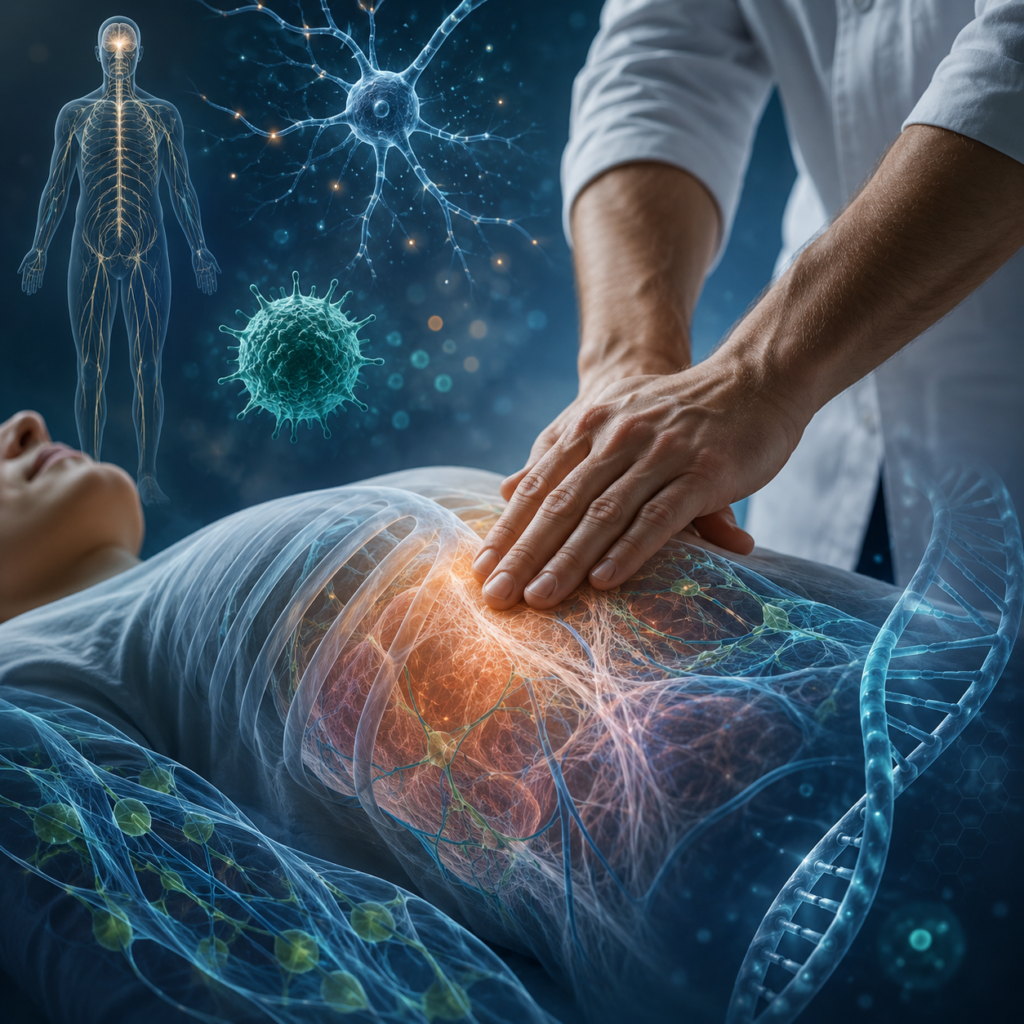
Expanded English Edition
Una versione ampliata per un pubblico internazionale
Il 15 giugno 2026 Osteopathy Academy ha pubblicato un contributo dedicato al possibile ruolo dell’osteopatia nel contesto oncologico, affrontando il tema attraverso la neurobiologia, la meccanobiologia e i complessi meccanismi che regolano l’ambiente tissutale.
Oggi proponiamo la versione inglese ampliata del lavoro del Dr. Oliviero Bonetti, D.O., M.Sc.
Non si tratta di una semplice traduzione del testo precedentemente pubblicato. Questa nuova versione approfondisce diversi aspetti, tra cui la meccanobiologia, la meccanotrasduzione, la memoria cellulare, la regolazione del sistema nervoso autonomo e le possibili prospettive future della ricerca osteopatica in ambito oncologico.
Il contributo mantiene una prospettiva prudente e interdisciplinare, distinguendo tra plausibilità biologica, ipotesi di ricerca ed evidenze cliniche e sottolineando la necessità di ulteriori studi rigorosi per definire possibilità e limiti dell’approccio osteopatico in questo ambito.
La scelta di pubblicare il lavoro anche in inglese nasce dalla volontà di rendere il contributo accessibile a una comunità professionale e scientifica più ampia, favorendo il confronto e la circolazione delle idee.
English Full Text
By Dr. Oliviero Bonetti, D.O., M.Sc.
Osteopath – Biologist
Introduction
The aim of this paper is to illustrate how the osteopathic approach, far from being limited to the management of musculoskeletal dysfunctions alone, can interact with the complex biological, neurological, and mechanical mechanisms underlying the oncogenic process.
Osteopathy was founded on the principle of enhancing the body’s intrinsic mechanisms of self-regulation and self-healing. This objective is achieved by restoring an optimal mechanical environment, improving blood perfusion, promoting venous and lymphatic drainage, and optimizing tissue innervation. A fundamental concept of osteopathic medicine, later extensively developed by the neurophysiologist Irvin Korr, is that of somatic dysfunction (formerly referred to as the osteopathic lesion).
Somatic dysfunction is defined as a mechanical, vascular, and neurological alteration affecting biological tissues, capable of impairing normal cellular physiology and potentially contributing to the development or progression of pathological processes, including cancer. Osteopathic physicians identify somatic dysfunction through the well-established TART criteria, consisting of Tissue texture abnormalities, Asymmetry, Restriction of motion, and Tenderness.
The Role of the Autonomic Nervous System in Cancer Biology
A central aspect of the present review concerns the influence of the autonomic nervous system (ANS) and the adrenal gland on the hallmarks of cancer. Increasing evidence indicates that the autonomic nervous system is capable of modulating virtually every stage of tumor development.
In particular, the release of norepinephrine and epinephrine, acting mainly through β-adrenergic receptors, has been shown to promote tumor initiation, progression, cellular proliferation, angiogenesis, and metastatic dissemination.
Activation of the sympathetic nervous system may contribute to several key oncogenic mechanisms, including:
- Sustained proliferative signaling, through activation of multiple intracellular pathways such as PI3K/Akt, Ras, ERK1/2, AP-1, STAT3, NF-κB, p38/MAPK, VEGF, matrix metalloproteinases (MMPs), and numerous pro-inflammatory interleukins.
- Immune evasion, by suppressing the activity of natural killer (NK) cells, CD8⁺ cytotoxic T lymphocytes, and macrophages, while simultaneously promoting the differentiation of fibroblasts into cancer-associated fibroblasts (CAFs).
- Promotion of a pro-tumor inflammatory microenvironment, accompanied by enhanced angiogenesis through increased production of vascular endothelial growth factor (VEGF), platelet-derived growth factor (PDGF), and fibroblast growth factor (FGF).
- Metabolic reprogramming of tumor cells, favoring aerobic glycolysis—commonly known as the Warburg effect—even in the presence of adequate oxygen availability.
- Increased genomic instability, together with impairment of DNA repair mechanisms, thereby facilitating tumor progression.
The Adrenal Gland and Cancer Progression
The adrenal glands also play a relevant role in cancer biology through the secretion of cortisol, the principal glucocorticoid stress hormone.
Persistent elevations in cortisol levels have been associated with impaired immune surveillance, reduced cellular resilience, interference with molecular targeted therapies and immunotherapy, and deterioration of patients’ quality of life. These observations suggest that neuroendocrine regulation may represent an important component of the biological network influencing cancer progression.
Mechanobiology as the Scientific Foundation of Osteopathy
One of the strongest scientific foundations supporting the osteopathic approach in oncology is mechanobiology, the discipline that investigates how cells perceive, interpret, and respond to mechanical stimuli.
A fundamental concept within mechanobiology is mechanotransduction, namely the ability of cells to convert mechanical forces into biochemical signals capable of regulating gene expression, cellular metabolism, proliferation, differentiation, migration, and apoptosis.
Increasing evidence demonstrates that alterations in the mechanical properties of the tumor microenvironment (TME)—including changes in hydrostatic pressure, compressive and tensile forces, extracellular matrix stiffness, and tissue viscoelasticity—are not merely consequences of cancer development but active drivers of tumor initiation and progression.
Mechanical stimuli are continuously sensed by cells and translated into intracellular signaling cascades that profoundly influence cancer biology.
Experimental Evidence
Compelling evidence supporting the biological relevance of mechanical stimulation comes from a study conducted at the Osher Center for Integrative Health, Harvard Medical School, using murine models of breast cancer.
The investigators demonstrated that the application of controlled mechanical stretching for only 10 minutes per day resulted in an approximately 52% reduction in tumor volume.
Although performed in an experimental animal model, this study suggests that appropriate mechanical stimulation may influence tumor biology by enhancing cytotoxic immune responses while simultaneously promoting the resolution of chronic inflammation.
These findings reinforce the concept that tissue mechanics should not be regarded solely as structural characteristics but rather as biologically active regulators capable of modulating cellular behavior.
Cellular Mechanosensors
Mechanical information is detected through highly specialized cellular structures known as mechanosensors, which convert physical forces into intracellular biochemical signals.
Among the principal mechanotransducers involved in cancer biology are:
- Piezo ion channels, responsible for detecting membrane deformation and mechanical loading.
- Integrins, transmembrane adhesion receptors that establish mechanical continuity between the extracellular matrix (ECM) and the cytoskeleton, regulating cellular migration, proliferation, and survival.
- Transient Receptor Potential (TRP) channels, which participate in mechanosensation and calcium signaling.
- Focal adhesion complexes, functioning as dynamic signaling platforms that integrate extracellular mechanical cues with intracellular responses.
Together, these structures orchestrate the cellular adaptation to changes occurring within the mechanical microenvironment.
YAP/TAZ and the Hippo Signaling Pathway
Among the intracellular signaling pathways influenced by mechanical forces, the Hippo pathway and its downstream transcriptional co-activators YAP (Yes-associated protein) and TAZ (Transcriptional co-activator with PDZ-binding motif) have emerged as central regulators of oncogenesis.
When exposed to increased extracellular matrix stiffness or persistent mechanical loading, YAP and TAZ translocate into the nucleus, where they activate the transcription of genes involved in:
- cellular proliferation;
- inhibition of apoptosis;
- stemness maintenance;
- tissue remodeling;
- tumor progression.
Persistent activation of YAP/TAZ signaling has been associated with several hallmarks of cancer, including:
- epithelial-to-mesenchymal transition (EMT);
- metastatic dissemination;
- resistance to chemotherapy and immunotherapy;
- resistance to anoikis, the programmed cell death normally induced when epithelial cells detach from their native extracellular matrix.
Consequently, alterations in tissue mechanics can directly influence gene expression programs that promote malignant transformation and tumor progression.
Mechanical Homeostasis and Osteopathic Perspective
From an osteopathic perspective, restoring physiological tissue mobility and reducing abnormal mechanical stresses may contribute to the normalization of the local mechanical environment.
Although direct evidence remains limited, this theoretical framework suggests that Osteopathic Manipulative Treatment (OMT) could influence cellular mechanotransduction by modifying tissue tension, extracellular matrix dynamics, vascular perfusion, and neural regulation.
Such hypotheses provide a biologically plausible rationale for investigating the role of osteopathic treatment as an adjunctive—not alternative—approach within integrative oncology, while emphasizing the need for rigorous experimental and clinical research to validate these proposed mechanisms.
Cellular Memory and the Long-Term Biological Effects of Mechanical Stimuli
One of the most innovative concepts emerging from contemporary mechanobiology is that of cellular memory, namely the ability of cells to retain information from previous mechanical, inflammatory, metabolic, or spatial stimuli and to modify their subsequent biological responses accordingly.
Rather than representing passive structural elements, stromal cells—including fibroblasts, myofibroblasts, and mesenchymal stem cells (MSCs)—are now recognized as dynamic biological systems capable of adapting to their microenvironment and maintaining long-lasting phenotypic changes through epigenetic and transcriptional mechanisms.
Current evidence suggests that at least four major forms of cellular memory contribute to tissue homeostasis and disease progression.
Mechanical Memory
Mechanical memory refers to the capacity of cells to “remember” prolonged exposure to altered mechanical environments.
Persistent increases in extracellular matrix stiffness or chronic mechanical loading induce profound changes in cytoskeletal organization and nuclear architecture. These adaptations include chromatin remodeling together with sustained nuclear localization of mechanosensitive transcription factors such as YAP/TAZ and NF-κB.
As a consequence, gene expression patterns remain altered even after the original mechanical stimulus has been removed, promoting long-term changes in cellular phenotype.
Within the tumor microenvironment, this phenomenon may contribute to sustained cellular proliferation, enhanced tissue fibrosis, and tumor progression.
Inflammatory Memory
Cells are likewise capable of developing inflammatory memory, whereby repeated exposure to inflammatory mediators induces persistent alterations in gene transcription.
Experimental evidence has demonstrated that recurrent stimulation with cytokines such as tumor necrosis factor-alpha (TNF-α) promotes stable epigenetic modifications, particularly involving histone methylation marks including H3K4me1 and H3K4me3.
These epigenetic signatures facilitate rapid reactivation of genes involved in inflammation, cellular migration, tissue remodeling, and survival.
Consequently, inflammatory memory may sustain the chronic low-grade inflammatory state that characterizes many neoplastic diseases and contributes to tumor progression.
Metabolic Memory
Cellular metabolism also possesses the ability to retain information derived from previous metabolic conditions.
Persistent alterations in nutrient availability, oxygen tension, or mitochondrial function can induce durable metabolic adaptations that influence cellular proliferation, differentiation, and resistance to stress.
Within the oncological setting, metabolic memory may reinforce the glycolytic phenotype characteristic of the Warburg effect, supporting tumor survival even when environmental conditions change.
Positional Memory
A further emerging concept is positional memory, whereby cells preserve information regarding their anatomical origin through stable epigenetic regulation of developmental genes.
This mechanism allows fibroblasts and mesenchymal stem cells from different anatomical regions to maintain distinct functional characteristics despite being cultured under identical experimental conditions.
Positional memory may therefore contribute to the remarkable heterogeneity observed among stromal cells within different tumor microenvironments.
Potential Implications for Osteopathic Manipulative Treatment
From an osteopathic perspective, these discoveries open intriguing hypotheses regarding the biological effects of manual therapy.
By restoring physiological tissue mechanics, improving vascular and lymphatic circulation, and optimizing neural regulation, Osteopathic Manipulative Treatment (OMT) may contribute to modifying the mechanical and biochemical signals perceived by resident cells.
The therapeutic objective would not simply be the correction of a biomechanical dysfunction, but rather the restoration of a physiological microenvironment capable of influencing cellular behavior through mechanobiological pathways.
Importantly, the biological effects of mechanical stimulation appear to depend on several critical variables, including:
- the magnitude of the applied force;
- the nature of the stimulus (compression, tension, or shear stress);
- treatment frequency;
- duration of mechanical loading;
- tissue-specific biomechanical properties.
These parameters are likely to determine which intracellular signaling pathways become activated and whether mechanical stimulation induces adaptive or maladaptive cellular responses.
From this perspective, manual therapy should be regarded as a form of mechanobiological modulation, whose effectiveness depends on the precise delivery of biomechanical stimuli capable of influencing mechanotransduction, epigenetic regulation, and ultimately gene expression.
Clinical Implications for Osteopathic Practice
From this perspective, the osteopathic approach may extend beyond the management of musculoskeletal symptoms and contribute to the regulation of biological systems involved in tissue homeostasis.
The primary therapeutic objective is not to act directly on the tumor itself but rather to optimize the patient’s internal biological environment by restoring physiological tissue mechanics, improving vascular and lymphatic circulation, and promoting autonomic nervous system balance.
Within this framework, several potential clinical targets may be identified.
Modulation of the Autonomic Nervous System
A growing body of evidence suggests that manual therapies may influence autonomic nervous system activity by promoting a shift toward parasympathetic predominance and reducing excessive sympathetic activation.
Considering the established role of chronic sympathetic stimulation in tumor progression, modulation of autonomic balance may represent one of the principal biological mechanisms through which osteopathic treatment could exert supportive effects in oncology.
Although current evidence remains preliminary, several studies have reported favorable changes in autonomic regulation following osteopathic manipulative treatment, supporting further investigation in this field.
Adrenal Regulation
Another potential therapeutic target concerns the adrenal glands and the hypothalamic–pituitary–adrenal (HPA) axis.
Specific osteopathic techniques have traditionally been proposed to influence adrenal function and contribute to the regulation of cortisol and catecholamine secretion.
Preliminary clinical studies have reported changes in circulating cortisol concentrations following manual treatment, although the underlying physiological mechanisms remain incompletely understood.
Given the impact of chronic stress hormones on immune competence, inflammation, and quality of life, modulation of neuroendocrine responses deserves further investigation within integrative oncology.
Restoration of Mechanical Homeostasis
Perhaps the most distinctive contribution of osteopathy lies in its potential ability to restore physiological tissue mechanics.
By acting on fascial continuity, extracellular matrix organization, diaphragmatic mobility, and tissue compliance, osteopathic treatment may contribute to normalizing the mechanical environment in which cells reside.
Such modifications could theoretically influence mechanotransduction pathways and downstream molecular signaling, thereby affecting cellular behavior.
While these hypotheses remain to be confirmed through high-quality experimental and clinical research, advances in mechanobiology provide an increasingly robust scientific framework supporting future investigation.
Future Perspectives
The integration of osteopathy into oncology should be viewed within a multidisciplinary model of patient care.
Osteopathic Manipulative Treatment is not proposed as an alternative to evidence-based oncological therapies but rather as a complementary intervention aimed at supporting physiological regulation, improving functional status, and potentially enhancing quality of life.
Future research should focus on identifying:
- the most appropriate indications for osteopathic treatment according to cancer type and stage;
- optimal treatment timing throughout the oncological care pathway;
- standardized treatment protocols;
- objective biological biomarkers capable of measuring treatment response;
- mechanobiological and neurophysiological mechanisms underlying clinical outcomes.
Particular attention should be devoted to translational research capable of linking laboratory discoveries with clinical practice, thereby establishing biologically plausible explanations for the effects observed following osteopathic intervention.
Conclusions
Recent advances in neurobiology, molecular biology, genetics, immunology, and mechanobiology have considerably expanded our understanding of how mechanical forces influence cellular behavior.
Within this evolving scientific landscape, osteopathy offers a conceptual framework that emphasizes the importance of tissue mechanics, autonomic regulation, vascular dynamics, and lymphatic function in maintaining physiological homeostasis.
Although current evidence does not support considering osteopathic treatment as a direct antineoplastic therapy, an increasing body of research suggests that manual interventions may influence biological processes involved in inflammation, mechanotransduction, autonomic regulation, and tissue adaptation.
These observations provide a compelling rationale for further investigation into the role of Osteopathic Manipulative Treatment as part of an integrated, patient-centered model of oncological care.
Ultimately, meaningful progress will require building strong scientific bridges between osteopathy and conventional biomedical research.
Only through rigorous interdisciplinary collaboration will it be possible to clarify the biological mechanisms underlying manual therapies, establish evidence-based clinical indications, and define both the opportunities and the limitations of osteopathy within modern integrative oncology.
Approfondimento
Questa pubblicazione rappresenta la versione inglese ampliata del contributo precedentemente pubblicato su Osteopathy Academy.
→ Leggi anche la versione italiana pubblicata il 15 giugno 2026
Post correlati